Pavers vs Concrete Patio: Which Is Better for NJ Homes?
If you are planning a new patio, walkway, or outdoor living space, one of the biggest decisions is whether to use pavers or poured concrete.
Both options can create a functional outdoor area, but they perform differently when it comes to appearance, durability, repair, maintenance, drainage, and long-term value.
For New Jersey homeowners, this choice matters even more because outdoor surfaces need to handle rain, snow, ice, humidity, and freeze-thaw cycles throughout the year.
This guide compares pavers vs concrete patios so you can choose the right option for your NJ home.
Quick Answer: Are Pavers or Concrete Better?
For many NJ homes, pavers are the better long-term choice because they offer more design flexibility, easier repairs, and stronger curb appeal. Poured concrete can be a more budget-friendly option upfront, but it is more likely to crack and can be harder to repair cleanly.
The best choice depends on your budget, style, drainage needs, and how you plan to use the space.
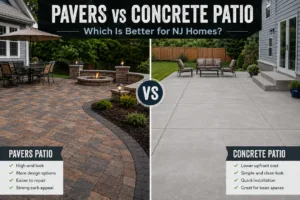
Pavers vs Concrete Patio Comparison Chart
| Feature | Pavers | Poured Concrete |
|---|---|---|
| Appearance | High-end, customizable, many patterns and colors | Clean and simple, but less design flexibility |
| Upfront Cost | Usually higher | Usually lower |
| Repair | Individual pavers can be replaced | Cracks are harder to hide or repair cleanly |
| Durability | Strong when installed over a proper base | Durable but more prone to visible cracking |
| Drainage | Can allow better water management depending on design | Requires proper slope and drainage planning |
| Curb Appeal | Very strong | Moderate to strong depending on finish |
| Maintenance | Occasional cleaning, joint sand, and possible re-leveling | Cleaning, sealing, crack repair, and surface maintenance |
What Are Pavers?
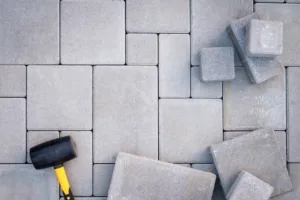
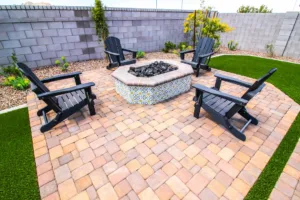
Pavers are individual pieces made from materials like concrete, brick, or natural stone. They are installed over a prepared base and arranged in patterns to create patios, walkways, driveways, steps, and outdoor living areas.
Because pavers are individual units, they can move slightly with ground conditions instead of cracking as one large slab. This is one of the reasons they are popular in areas with seasonal temperature changes.
Common paver uses
- Backyard patios
- Front walkways
- Driveway accents
- Pool areas
- Garden paths
- Outdoor seating areas
- Fire pit areas
What Is a Concrete Patio?
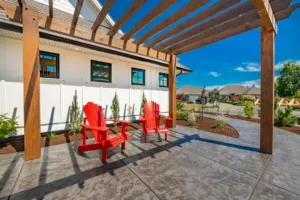
A concrete patio is typically made by pouring concrete into a prepared area, leveling it, and allowing it to cure into a solid slab.
Concrete can be finished in different ways, including broom finish, smooth finish, stamped concrete, or stained concrete. It is a common choice for patios because it can be cost-effective and straightforward.
Common concrete patio uses
- Simple backyard patios
- Walkways
- Side yards
- Utility areas
- Basic outdoor seating areas
Cost: Are Pavers More Expensive Than Concrete?
In most cases, pavers cost more upfront than poured concrete. That is because paver installation usually requires more labor, detailed base preparation, individual placement, edge restraint, cutting, leveling, and joint work.
Concrete is often less expensive upfront because it can be poured as one continuous slab.
Typical cost difference
- Concrete patios: usually lower upfront cost
- Paver patios: usually higher upfront cost but stronger design value
However, upfront price is not the only factor to consider. Repairs, lifespan, appearance, and long-term maintenance also matter.
Durability in New Jersey Weather
NJ weather can be hard on exterior surfaces. Patios and walkways deal with heat, cold, rain, snow, ice, moisture, and shifting ground conditions.
How pavers handle NJ weather
Pavers can perform very well when installed correctly. Because they are individual pieces, they can adjust slightly to movement in the ground. If one area settles, individual pavers can often be lifted, re-leveled, and reset.
The most important part of a paver patio is the base. Proper excavation, compaction, drainage, and edge restraint all affect how long the patio lasts.
How concrete handles NJ weather
Concrete is strong, but it can crack over time. Freeze-thaw cycles, poor drainage, soil movement, and heavy use can all contribute to cracking.
Control joints can help guide cracking, but they do not eliminate it completely. Once concrete cracks, repairs may remain visible.
Appearance and Design Flexibility
Pavers usually offer more design flexibility than poured concrete.
Paver design options
- Multiple colors
- Different shapes
- Patterns and borders
- Natural stone looks
- Modern or traditional styles
- Accent designs
- Custom walkways and patio layouts
This makes pavers a strong choice for homeowners who want the exterior to look more finished and intentional.
Concrete design options
Concrete can still look good, especially when stamped, stained, or finished carefully. However, plain concrete is usually more basic visually.
Stamped concrete can imitate stone or pavers, but it still behaves like one large slab, which means cracking can be more noticeable.
Maintenance: Which Is Easier?
Both pavers and concrete need some level of maintenance, but the type of maintenance is different.
Paver maintenance
- Cleaning as needed
- Adding joint sand over time
- Weed control between joints if needed
- Re-leveling areas if settling occurs
- Optional sealing for color and protection
Concrete maintenance
- Cleaning as needed
- Sealing depending on finish
- Crack monitoring
- Surface repair if damaged
- Resurfacing if the finish wears down
Concrete may feel simpler at first, but visible cracking can become a long-term appearance issue.
Repairs: Pavers Are Usually Easier to Fix
This is one of the biggest advantages of pavers.
If a paver patio settles, stains, or gets damaged, individual pavers can often be removed and replaced. This makes repairs more targeted and less noticeable.
With concrete, repairs are more difficult to hide. Patches, crack fillers, and resurfacing may not match the original slab perfectly.
Drainage and Water Management
Drainage is critical for patios and walkways in NJ.
Poor drainage can lead to:
- Standing water
- Ice buildup
- Shifting surfaces
- Foundation concerns
- Premature wear
Pavers can be designed with drainage in mind, especially when installed with the proper base and slope. Some paver systems may also allow water to move through joints depending on installation type.
Concrete requires proper grading and slope so water moves away from the home and does not sit on the surface.
Which Option Adds More Curb Appeal?
Pavers usually add more curb appeal because they create a more detailed, custom appearance. They work especially well for front walkways, patios, entry areas, and backyard gathering spaces.
Concrete can still improve curb appeal, especially when replacing broken or worn surfaces, but pavers typically feel more finished and premium.
When Pavers Are the Better Choice
Pavers may be the better option if you want:
- A more custom look
- Higher curb appeal
- Easier repairs
- More design options
- A patio or walkway that feels more premium
- Better long-term visual appeal
When Concrete May Be the Better Choice
Concrete may be the better option if you want:
- A lower upfront cost
- A simple patio or utility area
- A clean, minimal look
- A basic surface without custom patterns
Concrete can be a practical option, but it is important to plan for cracking, drainage, and long-term appearance.
Best Uses for Each Option
| Project Type | Best Option | Why |
|---|---|---|
| Front walkway | Pavers | Better curb appeal and custom entry design |
| Backyard patio | Pavers or concrete | Depends on budget, style, and use |
| Outdoor entertaining area | Pavers | More polished and customizable |
| Utility area | Concrete | Simple and cost-effective |
| High-end curb appeal upgrade | Pavers | Stronger visual impact |
Common Mistakes to Avoid
- Choosing only based on upfront price
- Ignoring drainage and slope
- Skipping proper base preparation
- Using materials that do not match the home
- Not planning for freeze-thaw conditions
- Hiring based only on the lowest estimate
Whether you choose pavers or concrete, installation quality matters. Poor prep work can lead to cracking, settling, drainage problems, and premature failure.
So, Which Is Better for NJ Homes?
For most curb appeal and outdoor living projects, pavers are the stronger option. They look better, offer more design flexibility, and are easier to repair over time.
Concrete can still make sense for simple, budget-conscious projects where appearance and customization are less important.
The best choice depends on your home, budget, and long-term goals.
Related Exterior Services
Iron Bear Projects provides exterior finish and outdoor living services across Monmouth County and Ocean County, NJ.
- Paver installation
- Patio construction
- Walkways
- Porches
- Deck building
- Siding
- Roofing
- Exterior upgrades
Learn more about our exterior services here:
Exterior Finishes in Monmouth & Ocean County, NJ
Final Thoughts
Pavers and concrete can both create useful outdoor spaces, but they are not the same.
Pavers usually offer better curb appeal, repair flexibility, and design options. Concrete usually offers a lower upfront cost and a simpler installation style.
If you are planning a patio, walkway, or outdoor living upgrade in NJ, choosing the right material now can help you avoid frustration later.
Ready to Upgrade Your Patio or Walkway?
If you are planning a new patio, paver area, walkway, porch, or exterior upgrade, Iron Bear Projects can help you choose the right option for your home.
Contact Iron Bear Projects today to schedule a consultation and get a quote.
Patio Material FAQs
Pavers vs Concrete Patio FAQs
Comparing pavers and concrete for your NJ patio or walkway? Here are common questions about cost, durability, repairs, drainage, and curb appeal.
For many NJ homes, pavers are the better long-term choice because they offer stronger curb appeal, more design flexibility, and easier repairs. Concrete can still be a good option for simpler, budget-focused patio projects.
Yes, pavers usually cost more upfront than poured concrete because they require more labor, base preparation, cutting, leveling, and individual placement. However, pavers can offer stronger long-term visual value and easier repair options.
Concrete can crack over time, especially with freeze-thaw cycles, ground movement, poor drainage, or heavy use. Pavers are individual units, so they can shift slightly and are often easier to reset or replace if an issue occurs.
Pavers are usually easier to repair because individual pieces can be removed, replaced, or re-leveled. Concrete repairs are often more noticeable because patched cracks or resurfaced areas may not match the original slab perfectly.
Pavers usually provide stronger curb appeal because they come in many colors, patterns, borders, and layouts. Concrete can look clean and simple, but pavers typically create a more finished and custom appearance.
Yes, pavers can handle NJ weather well when installed over a properly prepared base with the right drainage. Proper excavation, compaction, slope, and edge restraint are important for long-term performance.
Concrete can be a practical choice for a simple patio, utility area, or budget-conscious project. It offers a clean surface at a lower upfront cost, but it has less design flexibility and can be harder to repair cleanly.
Proper base preparation, drainage, slope, material selection, and installation quality are the most important factors. Whether you choose pavers or concrete, poor prep work can lead to cracking, settling, drainage issues, and premature failure.