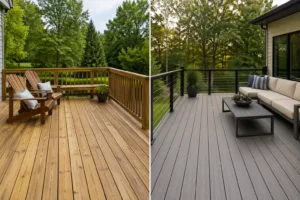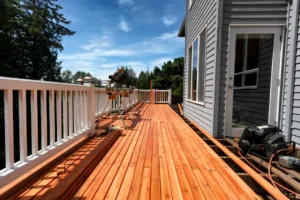
f you are planning a new deck in New Jersey, one of the biggest decisions you will make is choosing between wood and composite decking.
Both options have their pros and cons. The right choice depends on your budget, maintenance expectations, and how long you plan to stay in your home.
This guide breaks down the real differences so you can make the right decision for your space.
What Is Wood Decking?
Wood decking is typically built using pressure-treated lumber or natural hardwoods.
It has been the traditional choice for decades and is still widely used today.
Pros of Wood Decking
- Lower upfront cost
- Natural look and feel
- Widely available materials
- Easier to repair in sections
Cons of Wood Decking
- Requires regular maintenance
- Can warp, crack, or splinter over time
- Needs sealing or staining
- Shorter lifespan compared to composite
What Is Composite Decking?
Composite decking is made from a blend of wood fibers and plastic materials.
It is designed to look like wood while offering improved durability and lower maintenance.
Pros of Composite Decking
- Low maintenance
- Resistant to moisture and rot
- Does not splinter or crack easily
- Long lifespan
- Consistent appearance
Cons of Composite Decking
- Higher upfront cost
- Can get hot in direct sunlight
- Limited repair flexibility compared to wood
Cost Comparison in NJ
| Feature | Wood Deck | Composite Deck |
|---|---|---|
| Upfront Cost | Lower | Higher |
| Maintenance Cost | Higher over time | Lower |
| Lifespan | 10–15 years | 20–30+ years |
| Overall Value | Budget-friendly | Long-term investment |
Maintenance Comparison
Wood Deck Maintenance
- Annual sealing or staining
- Regular cleaning
- Occasional board replacement
Composite Deck Maintenance
- Basic cleaning with soap and water
- No staining or sealing required
- Minimal long-term upkeep
Durability in New Jersey Climate
New Jersey weather includes:
- Heavy rain
- Snow and ice
- Humidity
- Seasonal temperature swings
Wood Deck Performance
Wood can:
- Absorb moisture
- Expand and contract
- Require ongoing protection
Composite Deck Performance
Composite decking:
- Resists moisture
- Holds up better to weather changes
- Requires less long-term upkeep
Which Option Is Better for You?
Choose Wood If:
- You want a lower upfront cost
- You prefer a natural wood look
- You do not mind regular maintenance
Choose Composite If:
- You want low maintenance
- You plan to stay in your home long-term
- You prefer durability and consistency
Common Questions Homeowners Ask
Does composite decking really last longer?
Yes. Composite decking typically lasts significantly longer than wood with less maintenance.
Does wood decking look better?
Some homeowners prefer the natural variation of wood, but modern composite materials closely replicate that look.
Is composite worth the higher cost?
For many homeowners, yes. The reduced maintenance and longer lifespan often offset the higher upfront price.
Final Thoughts
There is no one-size-fits-all answer.
Wood decks are a great choice for budget-conscious homeowners.
Composite decks are ideal for long-term durability and low maintenance.
The best choice comes down to how you plan to use your deck and how much upkeep you are willing to handle.
Ready to Build Your Deck?
If you are planning a new deck or replacing an old one, choosing the right material is one of the most important decisions you will make.
👉 Learn more about our deck building services
Contact Iron Bear Projects today to schedule your consultation and get a quote.
Decking FAQs
Frequently Asked Questions About Composite vs Wood Decking
Choosing between composite and wood decking comes down to budget, maintenance, appearance, and long-term performance. Here are answers to common questions homeowners ask before deciding.
Composite decking is better for homeowners who want lower maintenance, longer lifespan, and better resistance to moisture and wear. Wood decking is still a great option for those who prefer a natural look and lower upfront cost.
Yes, wood decking usually costs less upfront than composite. However, wood often requires more maintenance over time, which can add to its long-term cost.
In most cases, yes. Composite decking generally lasts longer than traditional wood decking and holds up better against moisture, fading, and everyday wear.
Composite decking requires less maintenance. Wood decks usually need periodic sealing, staining, and cleaning, while composite decks mainly need occasional washing.
That depends on personal preference. Some homeowners prefer the natural grain and character of real wood, while others like the clean, consistent look of modern composite decking.
For many homeowners, yes. The higher upfront investment can be worth it because composite decking typically lasts longer and reduces the need for staining, sealing, and frequent upkeep.
New Jersey weather can be tough on outdoor materials. Wood decks are more vulnerable to moisture, temperature swings, and weather-related wear, while composite decking generally handles those conditions with less maintenance.
Yes, some composite decking can get warm in direct sunlight, especially darker colors. Material choice, color, and how much sun the deck receives all affect heat retention.
Yes, both types can be repaired, but wood is often easier to patch or replace board by board. Composite repairs depend more on product availability and the specific deck system used.
Composite decking often delivers stronger long-term value because of its durability and lower maintenance needs. Wood decking can still be a strong option when upfront budget matters most and regular upkeep is not a concern.